Accessibility Statement for Kiyomi Kitchens
Kiyomi Kitchens is committed to ensuring digital accessibility for everyone. We are continually improving the user experience for all visitors and applying the relevant accessibility standards.
Conformance status
The Web Content Accessibility Guidelines (WCAG) defines requirements for designers and developers to improve accessibility for people with disabilities. It defines three levels of conformance: Level A, Level AA, and Level AAA. Kiyomi Kitchens is partially conformant with WCAG 2.1 level AA. Partially conformant means that some parts of the content do not fully conform to the accessibility standard.
Accessibility Features Implemented
-
Semantic HTML:
We use semantic HTML5 elements to structure our content, providing
clear meaning to screen readers and other assistive technologies. This includes using appropriate
headings (
<h1>to<h6>), paragraphs (<p>), lists (<ul>,<ol>), and ARIA landmarks to define regions of the page. -
Alternative Text for Images:
All images include descriptive alternative text
(
altattributes) to convey the image's content and function to users who cannot see them.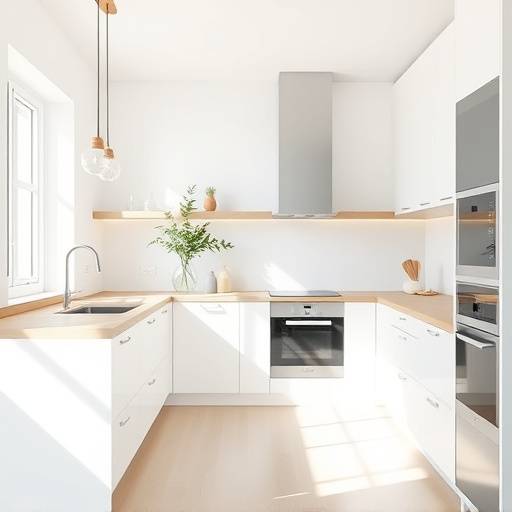 For decorative images, we use null alt attributes (
alt="") to prevent screen readers from announcing them. - Keyboard Navigation: Our website is fully navigable using a keyboard. Users can tab through interactive elements in a logical order, and visual focus indicators are clearly visible.
- Color Contrast: We have carefully chosen color combinations to ensure sufficient contrast between text and background colors, meeting WCAG 2.1 Level AA standards. We use a contrast ratio of at least 4.5:1 for normal text and 3:1 for large text.
- Resizable Text: Users can resize the text on our website without loss of content or functionality. We have avoided using fixed-size units (e.g., pixels) for text and instead use relative units (e.g., ems, rems, percentages) to allow for flexible text scaling.
-
Form Accessibility:
All form fields are properly labeled with
<label>elements, and instructions are provided to help users understand the expected input format. We also use ARIA attributes to provide additional information to assistive technologies, such as required fields and error messages. - Clear and Consistent Navigation: Our website has a clear and consistent navigation structure, making it easy for users to find the information they need. We use a main navigation menu with descriptive link text, and a consistent footer with links to important pages.
- Video Captions and Transcripts: All video content includes accurate captions and transcripts, providing access to auditory information for users who are deaf or hard of hearing.
- ARIA Attributes: We use ARIA (Accessible Rich Internet Applications) attributes to enhance the accessibility of dynamic content and interactive elements. ARIA attributes provide additional information to assistive technologies about the role, state, and properties of elements.
- Responsive Design: Our website is designed to be responsive, adapting to different screen sizes and devices. This ensures that users can access our content on a variety of devices, including desktops, laptops, tablets, and smartphones.
- Screen Reader Compatibility: We regularly test our website with popular screen readers to ensure compatibility and identify any accessibility issues.
- Avoiding flashing content: We avoid using content that flashes more than three times per second, as this can cause seizures in some individuals.
- Consistent layout: The layout of our website remains consistent across different pages, making it easier for users to navigate and find the information they need.
- Descriptive Link Text: We use descriptive link text that clearly indicates the destination of the link. We avoid using generic link text such as "click here" or "read more."
Ongoing Efforts to Improve Accessibility
We are committed to ongoing efforts to improve the accessibility of our website. This includes:
- Regularly auditing our website for accessibility issues using automated testing tools and manual reviews.
- Providing accessibility training to our staff.
- Incorporating accessibility considerations into our design and development processes.
- Seeking feedback from users with disabilities and using their feedback to improve our website.
Accessibility Feedback
We welcome your feedback on the accessibility of Kiyomi Kitchens. Please let us know if you encounter accessibility barriers on our website:
Email: accessibility@kiyomikitchens.com
Phone: (415) 555-0123
Address: 555 California Street, Suite 100, San Francisco, CA 94104
We try to respond to feedback within 5 business days.